
Iran’s Strike Capabilities Are Improving: Multi-Domain Operations In Practice

The Six-Hour Strike
Russian Imagery, Chinese Navigation, and Iranian Swarm Tactics Against a U.S. Logistics Hub in Kuwait
In the early hours of July 14, 2026, imagery from Russian reconnaissance satellites was used to provide fresh high-resolution coverage of the target area in southern Kuwait. Iranian operators at a forward command node received this imagery and fed it into their dynamic targeting system. This allowed them to update target coordinates and attack parameters with the most current intelligence available.
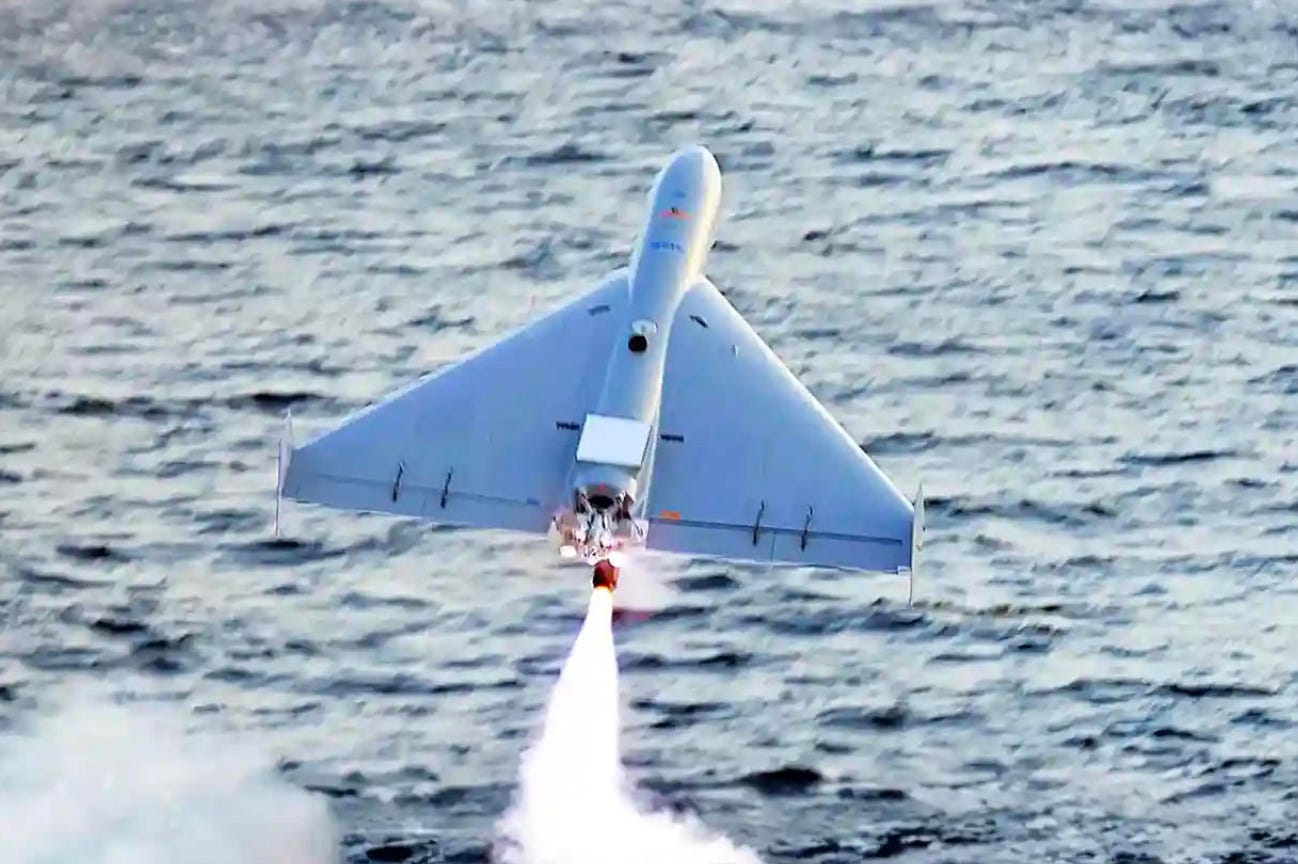
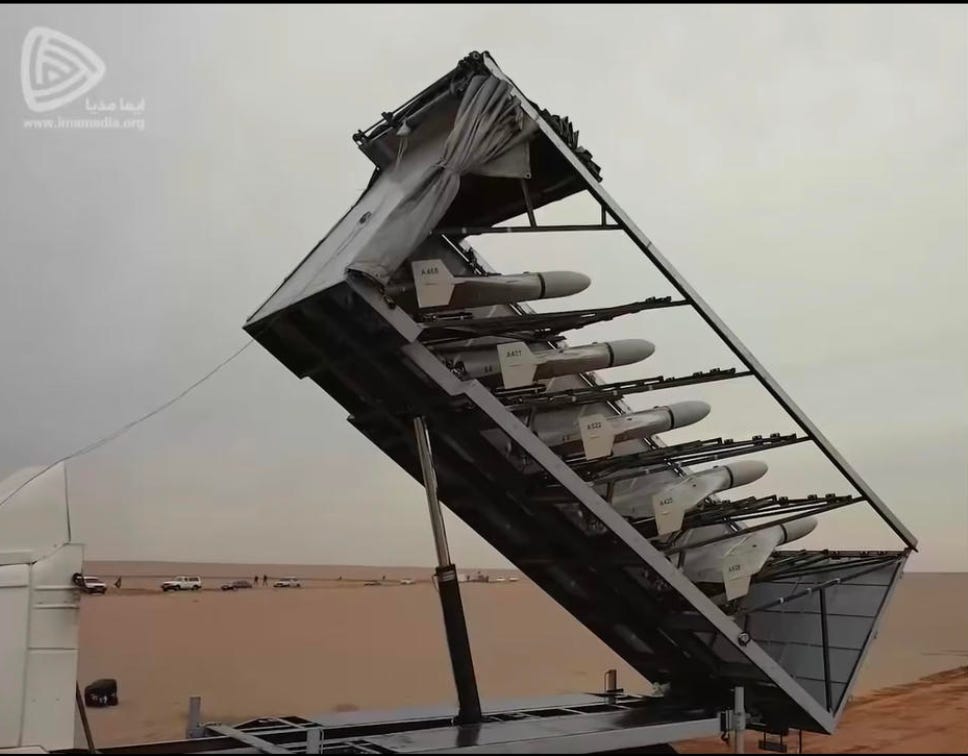
At approximately 0300 local time, pre-dawn, the first wave of Shahed-136 loitering munitions launched from truck-mounted systems in central Iran, roughly 950 kilometers away. These one-way attack drones are designed to fly long distances before diving onto their targets. Most of the launchers were multi-rail flatbed trucks, typically carrying five to ten inclined rails--a configuration long used by the IRGC Aerospace Force for massed launches. Some units employed covered or containerized launchers, and (by all accounts) improving concealment which enabled faster sequential firing.
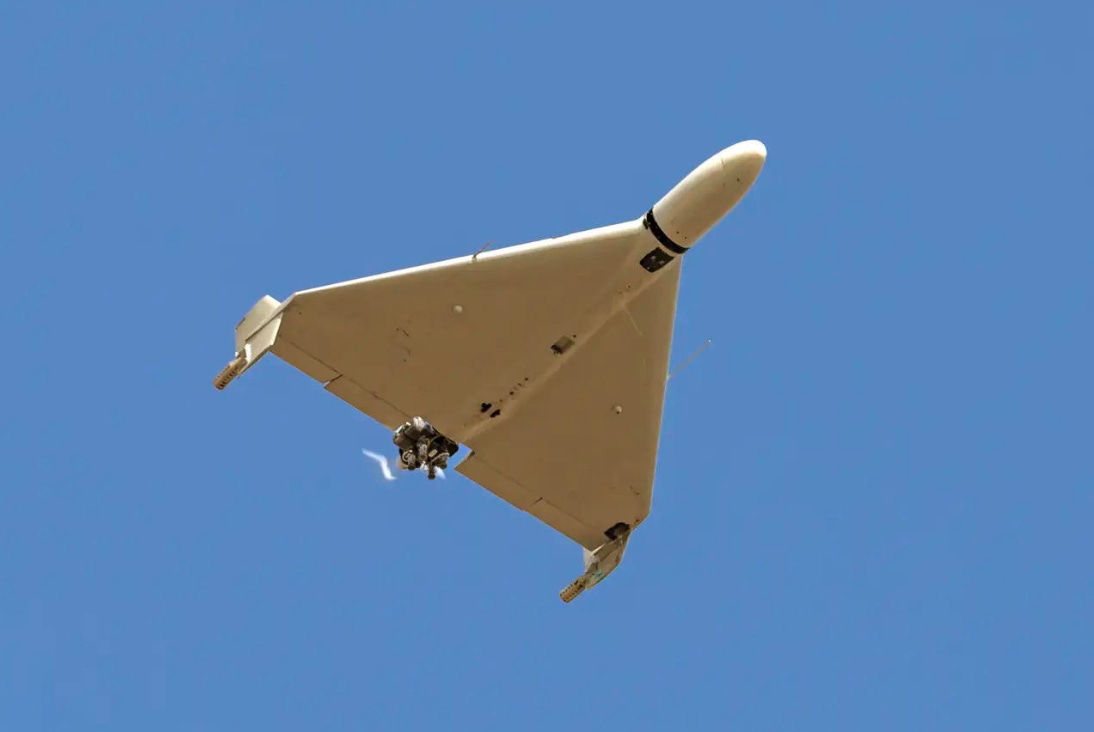
Once airborne, the drones relied on Chinese BeiDou-3 satellite navigation receivers equipped with multi-frequency anti-jam antennas and inertial navigation backups. This combination allowed them to maintain accurate positioning while flying at low altitude, reducing the risk of detection.
Iranian mesh-networking capabilities -- building on reported research at centers such as Malek Ashtar University of Technology and IRGC Aerospace Force -- enabled the drones to communicate directly with one another. The swarm could share sensor data and adjust its formation with greater autonomy, reducing reliance on a single central control point.
Mid-flight, the drones received an updated targeting packet via secure link, refining their aimpoints on the warehouse roof and adjacent fuel storage areas. As they crossed into Kuwaiti airspace, the swarm split into separate groups. Some drones acted as decoys to draw fire from local air defenses while the main strike package continued toward the target. In the terminal phase, guidance combined BeiDou-corrected navigation with Iranian electro-optical and infrared seekers developed by the IRGC Aerospace Force and the Iran Aviation Industries Organization. These upgrades allowed individual drones to lock onto specific sections of the target complex with improved precision.
Multiple direct impacts followed. The warehouse was soon engulfed in flames, later confirmed by NASA fire-mapping satellites. The strike, part of the IRGC’s fourth wave codenamed “Ya Abul-Hassan,” demonstrated the effective combination of Russian real-time intelligence, Chinese resilient navigation, and Iranian swarm coordination.
Drawing on observed improvements in responsiveness and coordination, the end-to-end sequence in this case was compressed to roughly six hours -- a notably short timeline for planning and executing a precision strike against a target nearly a thousand kilometers away.
Why the Attack Worked
The strike on the KGL Transport warehouse helps explain the noticeable improvement in accuracy and coordination displayed by Iranian operations in recent weeks. Viewing these attacks purely through a technological lens obscures their true scope; instead, they represent a deliberate integration of capabilities across every layer of the battlespace. This level of synchronization is best understood through the requirements of modern multi-domain operations.
Simply put, multi-domain operations describe the coordinated use of different military tools across several interconnected layers. These include the electromagnetic spectrum (the invisible radio waves and electronic signals used for communication, radar, and navigation), the air domain (the sky itself, occupied by missiles and drones), unmanned and autonomous systems (drones and robots that operate without a human crew and can communicate with each other), and precision strike assets (long-range weapons designed to hit exact targets such as a specific warehouse roof or fuel tank). The central offensive requirement in high-end warfare is the ability to push through contested or defended airspace in order to strike the high-value nodes that sustain an adversary’s command structure and defensive network.
At its core, the concept treats the battlefield as a single, integrated system rather than a collection of separate domains. It functions much like an NFL goyball team under one head coach:
• The head coach sets the overall game plan and decides how the different units will support each other. • The offensive coordinator runs the offense with its own plays and personnel.
• The defensive coordinator manages the defense with its schemes and matchups.
• The special teams coach handles kickoffs, punts, and returns.• Each unit has its own equipment, formations, and responsibilities, yet none operate in isolation.
• Every decision is made with the larger strategy in mind -- so that a strong defensive stand can improve field position for the offense, or a well-executed punt can pin the opposing team deep.
• The team succeeds when these separate groups are deliberately coordinated rather than acting independently.
The same principle applies here. Actions in one layer are used to create or improve opportunities in another, generating temporary windows that can be exploited before the opponent can respond. Success depends on rapid decision-making, protection of friendly information and guidance links, and the ability to coordinate manned and unmanned platforms as part of a single effort.
This integrated method has become a core requirement of contemporary high-end warfare. The United States formalized its version as Multi-Domain Operations. China developed a more explicitly system-oriented framework through integrated joint operations and multi-domain integrated joint operations, treating warfare as a contest between opposing systems rather than a series of isolated engagements. Russia’s mastery of reconnaissance-strike complexes and highly compressed decision cycles has set a new benchmark for modern warfare. This operational sophisticatedness underscores a vital reality: success depends entirely on the capability to protect guidance links, rapidly update targets, and seamlessly synchronize unmanned systems with precision effects.
Iran has yet to publish a formal public doctrine under the name Multi-Domain Operations or alternative; and given that they’re a bit preoccupied at the moment, it will probably be a while before they do. That absence, obviously, should not be mistaken for absence of the practice itself. To the trained eye, and according to assessments circulating among those with direct insight into recent operations, the principles are being employed with a level of efficiency that can reasonably be considered on par with what superpowers achieve through far more resource-intensive structures. Iran is doing so by leveraging its asymmetric advantages and executing a form of Mosaic offense through this integrated framework -- distributing sensors, shooters, and decision nodes in a way that generates coordinated effects without requiring the heavy, centralized architecture typical of traditional great-power forces. The results in recent weeks speak for themselves.
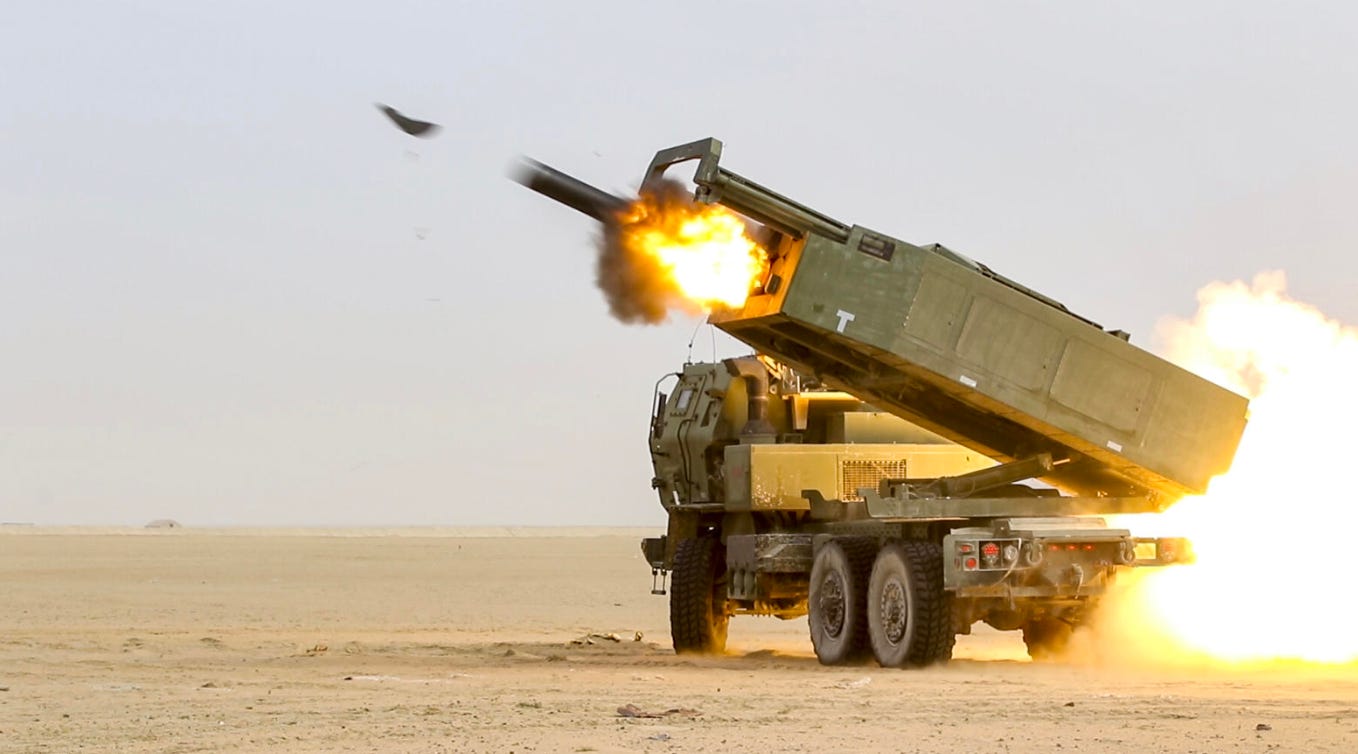
In mid-July 2026, for example, Iranian forces used precision drones to strike and destroy two US HIMARS rocket launchers in Kuwait that were already set up and ready to fire on targets inside Iran. HIMARS are truck-mounted rocket systems that the US can quickly move into position and prepare for launch, often in under 30 minutes. By locating and hitting these launchers while they were operational, Iran showed it could respond rapidly to mobile strike systems even after they had been deployed and readied for use.
Doctrinal Foundations: United States and China
United States thinking is reflected in the U.S. Army’s Multi-Domain Operations 2028 concept, along with Joint Publication 3-01 on Countering Air and Missile Threats and Joint Publication 3-60 on Joint Targeting. These documents emphasize the need to combine electronic warfare, real-time targeting, and autonomous systems when operating in environments where access is actively contested.
Chinese doctrine offers a parallel but more systematically developed perspective. The Guidelines on Joint Operations of the Chinese People’s Liberation Army (Trial), issued by the Central Military Commission in Beijing in November 2020, identify integrated joint operations as the basic form of warfare at every level. Building on that foundation, the Science of Military Strategy (2020 edition), published by the National Defense University in Beijing, develops the concept further, positioning multi-domain integrated joint operations as the concrete form this takes under the conditions of contemporary conflict.
In this framework, warfare is understood as a contest between opposing systems rather than a fight between individual units or platforms.
“Multi-domain integrated joint operations are system-to-system confrontations.”
-- Science of Military Strategy (2020), National Defense University
Modern conflict is largely a contest of network superiority. Rid yourself of the antiquated, boomer-normie idea of a picturesque, “Top Gun” style duel between individual platforms like tanks or aircraft. Victory is decided by whose unified architecture of sensors, shooters, command links, and support systems can out-function the opposing network.
Success depends on achieving information dominance (control of information and communications) through networked command arrangements.
“Relying on the joint combat system based on the network information system... system confrontation is the inevitable future of war.”
-- Science of Military Strategy (2020), National Defense University
The side that can see more clearly, share information faster, and keep its command network working while
disrupting the opponent’s will hold the decisive advantage.
The goal is to generate cross-domain synergy, coordinated effects across different areas of warfare, in ways that create temporary windows of superiority and then convert detection into destruction through precision strikes.
“Contests between systems-of-systems with system-versus-system contests at its foundation will inevitably become a primary pillar of future combat.”
-- Science of Military Strategy (2020), National Defense University
When every part of the force is linked, a weakness found in one domain (for example, a gap in air defenses or a jammed radar) can be immediately exploited by weapons coming from another domain. Finding the target and hitting it become almost the same step.
Unmanned systems and new-type forces are treated as integral components of this system-of-systems structure rather than as supplementary tools.
“In information-based local wars, system confrontation is better than platform confrontation...”
-- Science of Military Strategy (2020), National Defense University
“Platform confrontation” means fighting vehicle-against-vehicle or weapon-against-weapon (tank versus tank, plane versus plane, ship versus ship). System confrontation is different: the individual vehicles and weapons are treated only as pieces inside a larger connected network. Drones and autonomous systems are built directly into the foundation of modern military networks rather than being tacked onto older forces as afterthoughts. By weaving these technologies in from the very start, the entire network becomes faster, not to mention highly adaptable, and a pain in the ass to disrupt.
Much has been made of Iran’s now-legendary mosaic strategy, so much so that it is easy to conflate it with the core of multi-domain operations. Not really. They are distinct. Multi-domain operations refer to the underlying ability to protect guidance links, rapidly update targets, and coordinate effects across different layers of the battlespace. Mosaiac Defense is the specific way Iran has chosen to fight -- i.e. distributing sensors, shooters, and decision nodes, etc, so the force can strum up pressure from lots of directions at once without relying on a heavy, centralized structure.
Look at it like this: Multi-domain operations are the foundational operating system, while mosaic defense is a specialized app. You cannot run a high-performance app if the underlying operating system is broken. In the same way, a decentralized mosaic defense only reaches peak effectiveness because the complex problems of multi-domain synchronization have already been solved. Without resilient navigation, or the ability to keep unmanned systems coordinated under pressure. Mosaiac Defense can easily collapse into disconnected attacks. Recent Iranian strikes show that this multi-domain competence now exists in practice. It is visible in the combination of Chinese electronic counter-countermeasures (ECCM) that preserve the integrity of guidance and communications links, Russian approaches to dynamic targeting that enable rapid adaptation against time-sensitive objectives, and Iranian advances in swarm intelligence that allow coordinated mass to overwhelm defenses while retaining precision. The result is a clear improvement in strike effectiveness, as many who are sympathetic to the resistance have gotten to enjoy.
That diffusion helps explain the position the United States now finds itself in. Iranian command-and-control, air defense, and coastal defense systems have been deliberately built for survivability. Much of America’s prior surveillance capability has been degraded or driven off. As a result, the United States is operating in what can be
described as a force-discovery phase -- an information-gathering phase of trying to figure out Iran’s defenses -- in which it does not yet have a clear, reliable picture of Iranian defenses and must actively gather information while fighting.
This is why many recent U.S. strikes function less as decisive attacks and more as reconnaissance-in-force. The goal is to both inflict damage AND force Iranian systems to react so that American forces can study those reactions. By watching how Iranian radars activate, how quickly missile units respond, how command networks coordinate, and how defenses perform under pressure, the U.S. is slowly piecing together a map of Iranian capabilities. This process continues even while losing drones and facing Iranian counterattacks. While many U.S. strikes may appear random or purely destructive, they are often part of a broader intelligence effort designed to gather information about Iranian capabilities.
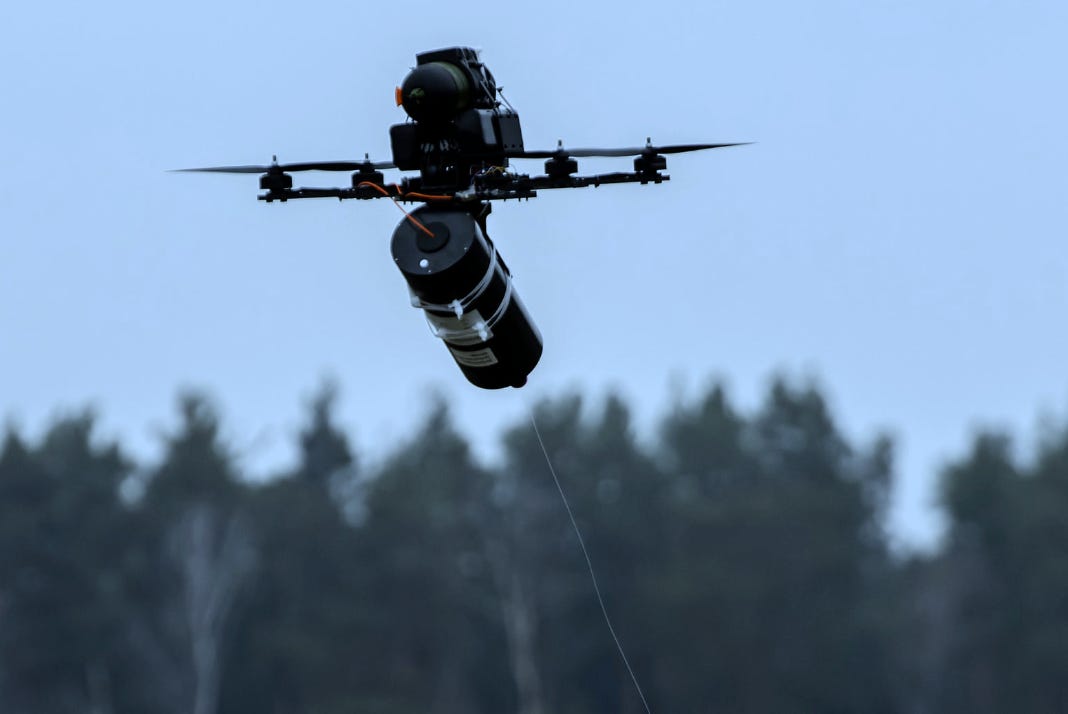
The broader significance is difficult to ignore. The same underlying methods are already visible among Iran’s partners in the Axis of Resistance. In the Red Sea, Ansarallah has repeatedly executed coordinated multi-domain attacks on shipping -- most clearly in the July 2025 strikes on the bulk carriers Magic Seas and Eternity C. Those operations combined explosive unmanned surface vessels, anti-ship cruise and ballistic missiles, and armed skiffs in a single converging assault, forcing defenders to deal with surface and air threats simultaneously. In Lebanon, Hezbollah integrates jam-resistant fiber-optic drones with rocket and missile fire to execute layered attacks on Israeli positions, armor, and air-defense batteries. By utilizing these drones simultaneously as precision strikers and real-time spotting assets for follow-on fires, the group demonstrates that advanced multi-domain capabilities—such as link protection, unmanned systems coordination, and cross-domain effects—are no longer exclusive to premier state militaries.
The conflict itself underscores how far the situation has moved from early expectations. What was repeatedly framed in the opening phase as a short operation -- Trump stated in early statements that “I think two or three weeks, yeah, we’ll leave” and described it as something that would be “over in a matter of weeks” -- has now stretched across more than four months. The Strait of Hormuz remains constrained, with commercial traffic still far below pre-war levels amid ongoing friction over routing and security.
Meanwhile, Iranian forces have continued to refine accuracy, targeting selection, and the coordination of multi-axis strikes under sustained pressure. That improvement has been possible because the underlying multi-domain competence -- resilient guidance, rapid retargeting, and the ability to synchronize unmanned systems with precision effects -- has held and, in key respects, advanced. Despite facing intense U.S. and Israeli military pressure (including attempts to degrade early-warning networks and command structures), economic sanctions, and the demands of supporting partners across multiple theaters while operating under contested
conditions, Iran has maintained and enhanced its operational edge.
If Iran has achieved this level of performance in spite of those obstacles, how much more capable will these methods be in another four months? How many additional missiles and drones will be available by then? Can the United States or the wider global economy that still depends on stable energy flows afford that timeline? The eternal “we’ll see”.
 | A guest post by
|
unlike Amurrica and NATO, over the past 4 years, first Russia and now Iran have done what the Marines were allegedly taught:
improvise
adapt
overcome
since late 2022 and especially since 2023, Russian tactics, weapons, methods: all improved, changes were made, some were discarded as crap and others were improved
the improvement and adaptations have continued
meanwhile, the Israelis sent their armour without anything - no anti-drone shields or anything the Russians have implemented to deter the FPV drones from destroying their armour
the Israelis and their US/NATO backers? no changes… and Hezbollah destroyed them
Iran (and China) similarly has taken lessons learned from watching the Americans play games with the Russians, string them along, make fake promises all to stall for more time
meanwhile, US and NATO show they learned absolutely and believe - like Haig on the Western Front 1914-19 - their Strategy is genius and all the blame lay with the soldiers who are dying instead of fulfilling their mission objectives