
Tomorrow the Machine (I)
Jacobin's Purity Fetish Analysis of the Burkina Faso Revolution

“It is a fact: the nation is a bourgeois phenomenon.”
-Aimé Césaire, Discourse on Colonialism
An April, 2026 online article posted by Jacobin (which is considered one of the foremost socialist online publications) cannot help but adopt a tone of irascibility regarding the leader of the West African nation of Burkina Faso: “Ibrahim Traoré Would Like to Be Thomas Sankara’s Heir.” Authored by Bettina Engels, a Professor of Political Science from Berlin, the Jacobin piece serves as a follow-up to her original article for Review of African Political Economy, “More pragmatic than socialist: Burkina Faso’s recent politics is no remake of Sankarism.”
As the Amerikan empire and its allies lash out at sovereign nations throughout the Global South on a weekly basis (see Iran, Venezuela, and Caribbean fishermen), Engels and Jacobin have calculated that their platforms are best utilized launching critiques at one of Africa’s most popular revolutionary movements.
Why is it that, just as Traoré is fighting off multiple attempted military coups, these so-called ‘leftists’ feel the need to make such claims about the supposed illegitimacy of the current phase of the Burkinabè Revolution? Why do Engels and Jacobin so eagerly delineate the Burkina Faso of Traoré as something that has betrayed the original sentiments of so-called ‘Sankarism?’ Why does this narrative persist among ‘leftists’ in the West despite the concrete material gains achieved by the Burkinabè people since 2022?
~
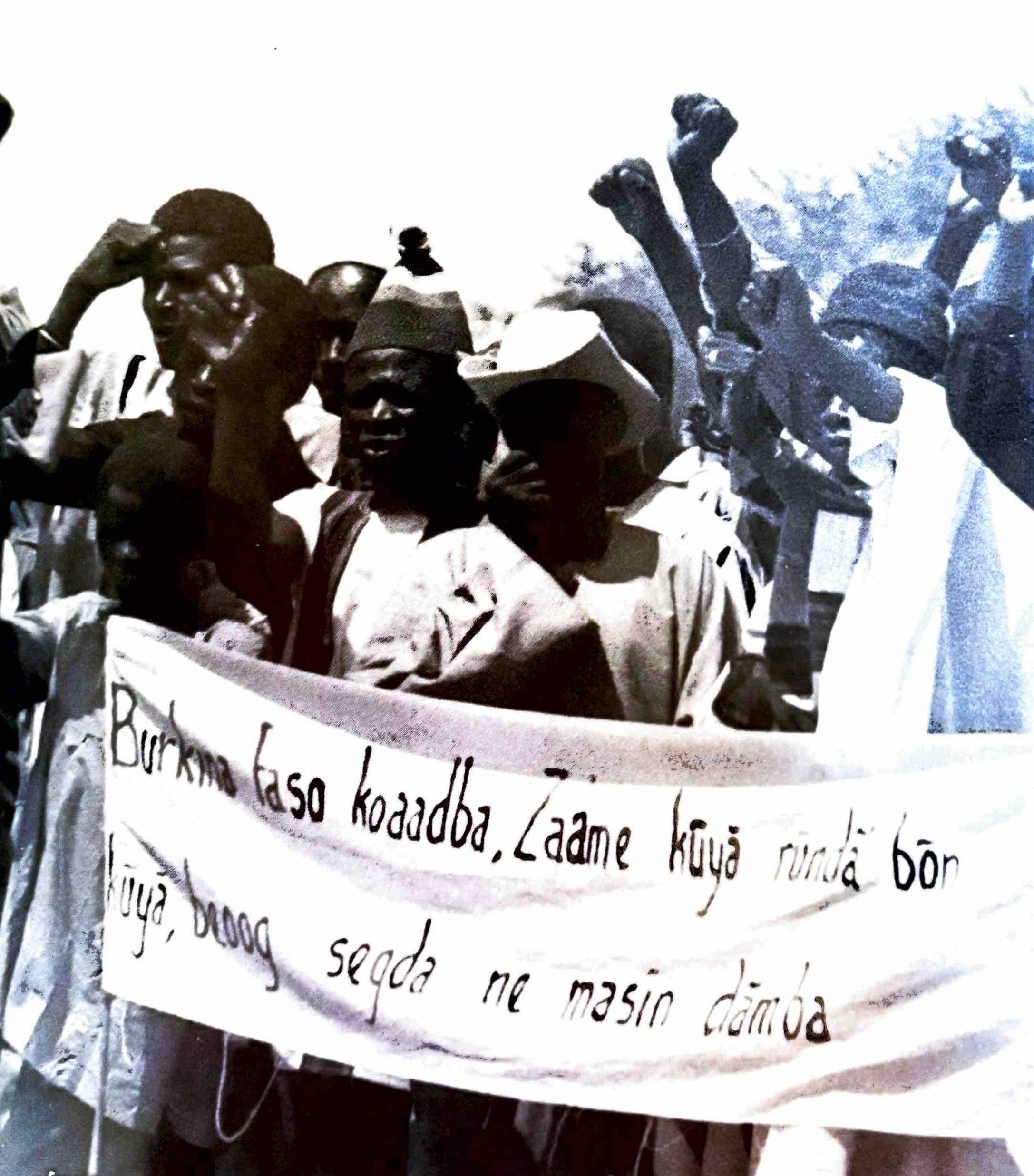
In the years since Traoré took power, some of the developments to which the Burkinabè people have born witness include:
2023: The new administration begins rolling out its Offensive agro-pastorale et halieutique 2023–2025 (Agricultural and Fisheries Offensive of 2023-2025) to promote food sovereignty.
Jan. 2023: Traoré’s government expels the French embassy from the country, referring to France as an ‘imperialist state.’
Feb. 2023: All French military personnel are forced to leave Burkina Faso after 13 years of operating in the country.
Jul.-Sep. 2023: The Alliance of the Sahel States (AES) is formed in conjunction with Mali and Niger, setting the course for an independent, anti-colonial movement in West Africa.
Jun. 2024: The Traoré administration launches its Presidential Initiative for Agriculture, providing a massive government support program for Burkina Faso’s agricultural sector—the lifeblood of its domestic economy.
Aug. 2024: The first steps are taken to nationalize the country’s mining/mineral industry, the main natural source of Burkina Faso’s material wealth—two of the nation’s largest gold mines were nationalized during this first phase. We note here that Burkina Faso is the world’s 13th-largest producer of gold, while remaining one of the poorest countries in the poorest region of Africa.
Apr. 2025: The first wide-scale assassination and regime change plot against the Traoré and his administration is undertaken by Ivory Coast-based militia groups and former Burkinabè military personnel. The attack comes just two weeks after AFRICOM Commander Michael Langley testified before the US Senate Armed Services Committee, declaring Traoré a threat to US national security because of the nationalization of Burkina Faso’s precious mineral wealth. As reported by MintPress News, the Amerikan Embassy changed its travel guidelines to “do not travel” regarding Burkina Faso just before the coup attempt; Langley also met with the Defense Minister of the Ivory Coast both before and after the insurgency.
Jun. 2025: The second wave of mine naturalizations expels French colonialists from five more of the largest gold mines in Burkina Faso. Shortly afterward, all rural land is nationalized for the purpose of agricultural development that serves the Burkinabè people.
Jan. 2026: Another large coup attempt is foiled by the Traoré administration. Burkinabès took to the streets en masse to demonstrate their support for Traoré and the revolutionary government immediately following the failed regime change effort. People’s Dispatch notes that “to the West on Burkina Faso’s southern border is Togo – home to ‘the principal actor’ [in] this plot, Burkina Faso’s former Lieutenant-Colonel Paul-Henri Damiba,” who was ousted by Traoré during the popular uprising of 2022.
Mar. 2026: Burkina Faso launches its $65 billion National Development Plan with the principal goal of regaining total control of the country from jihadist and terrorist groups. (As Business Insider Africa notes, “despite security challenges, the government has expanded control of national territory from 69% in 2023 to 73.56% by late 2025.” ‘Security challenges’ is a rather misleading term used to describe being under siege by Western-backed jihadist military forces.)
Jun. 2026: The AES announces the launching of the Union of Territorial Collectivities, a regional initiative designed to promote collaboration and solidarity among the indigenous villages of the Sahel States.
Jul. 2026: The Burkinabe government inaugurates its first completely state-owned gold mine in the municipality of Yako, which is “expected to produce more than seven tons of gold over the next 15 years while creating more than 1,200 direct and indirect jobs.”
Despite all this, Engels maintains that “the question remains as to what alternative idea of democracy and political rule Traoré and the MPSR 2 [Traoré’s party] represent. So far, they seem to rely rather on what is often referred to as output or performance legitimacy (legitimacy based on answering the basic demands of the population and improving material living conditions).”
In other words, to Engels and the Jacobin ‘Left,’ the new phase of the Burkinabè Revolution, while resulting in immediate material gains and indubitably responding to some of the most dire needs of its citizenry, is nevertheless at best worth a sort of apathetic ambivalence from their Western audience. Why do they come to this conclusion?
~
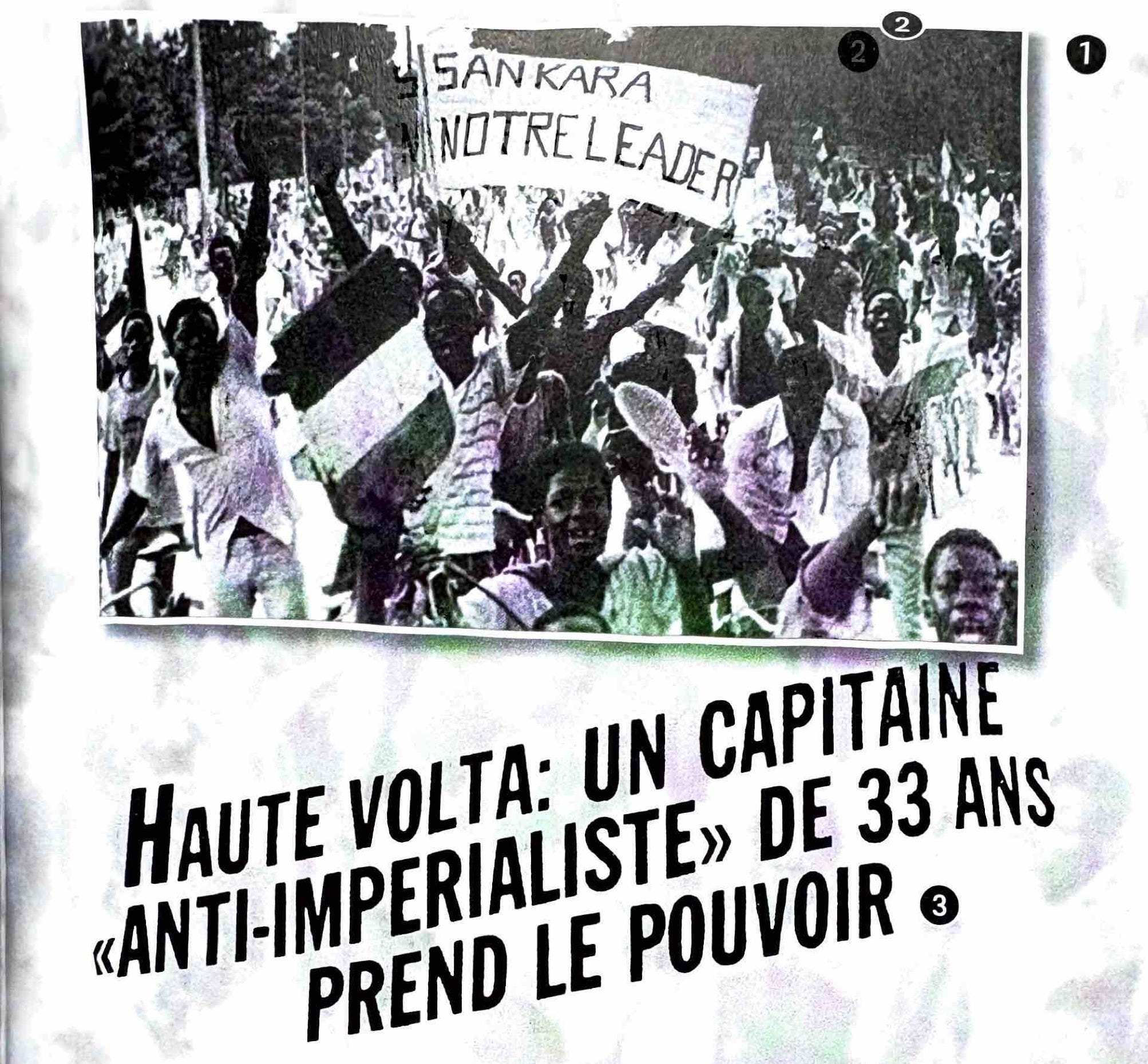
From the Cold War period onward, the Amerikan empire has achieved the imposition upon much of the Western world a phenomenon which Cuban-American Communist and Professor of Philosophy Dr. Carlos L. Garrido labels the ‘Purity Fetish.’ In his book The Purity Fetish and the Crisis of Western Marxism, Garrido critiques Western ‘leftists’’ inability to come to the realization that:
Socialism is not ‘betrayed’ when it, encountering the external and internal pressures of imperialism and a national bourgeois class, is forced to take more so-called ‘authoritarian’ positions to protect the revolution. Socialism is not ‘betrayed’ or transformed into ‘state capitalism’ (in the derogatory, non-Leninist sense) when faced with a backwards economy it takes the risk of tarrying with its opposite and engages a process of opening up to foreign capital to develop its productive forces. The ‘authoritarian’ moment, or the moment of ‘opening up to foreign capital,’ are not an annihilating negation of socialism—as Western Marxists would have you believe—but the sublation of the idealistic conceptions of a ‘pure’ socialism, especially in its earliest stages… The ‘authoritarianism’ that the Western Marxist’s purity fetish condemns is in every instance a necessary component to protect a revolution’s sovereignty and socialist democracy.1
In a similar vein, Italian Marxist militant Domenico Losurdo dubs this tendency the “bifurcation of two Marxisms.” In his seminal book, Western Marxism: How it was Born, How it Died, and How it Can be Reborn, Losurdo outlines “how different socioeconomic contexts and varying cultural traditions contributed to bifurcating the Marxisms in the West and the East.” Indeed, as he points out, there “should not be any contradictions between Western Marxism and Eastern Marxism. We are dealing with two different perspectives on the same social system, each taking off from Lenin’s analyses [which in turn had built upon Marx’s]. In other words, two struggles for recognition called into question imperialism-capitalism.”2
In practice, we can see that there are indeed contradictions between the development of Marxism and ‘progressive’ politics of Western and Eastern countries. Western ‘leftists’ regularly disparage these differences as ‘impurities’ or ‘inefficacies’ of revolutionary movements abroad, especially those of the Global South. In doing so, they remain blind to or willfully ignorant of the political context surrounding the actions taken by these movements.
The purity fetish and the misunderstanding of Marxism by Western ‘leftists’ is due, in large part, to the failure to grasp the essence of imperialism as it was initially laid out by Lenin in 1916-’17. Domenico Losurdo explains that “if, in the West, communism and Marxism are the truth and the weapon to end war and pull it up by the roots, in the East, communism and Marxism-Leninism are the truth and the ideological weapon to end a situation of oppression and being ‘looked down upon’ by colonialism and imperialism.”3
This distinction is highlighted in another example cited by Losurdo of Ho Chi Minh’s 1923 comments on Marxism: “Marx built his doctrine on a certain philosophy of history. What history? That of Europe. But what is Europe? It is not humanity in its entirety.”4 Through the poignant declarations of anti-colonial leaders of the Global South such as Minh, we can see that Losurdo’s mapping of the bifurcation of the two Marxisms leads to a definitive conclusion: at the core of the philosophy of ‘Eastern’ Marxism is the two-pronged struggle against imperialism and colonialism, a crucial aspect of a revolutionary movement that is often lacking (or altogether absent) in Western Marxist movements.
Garrido, for his part, separates the Western ‘left’ from those revolutionary movements of the East with the following analysis:
According to the orthodox view (which was reformed by Marx and Engels in posthumously published manuscripts) where capitalism was most developed, i.e., Western Europe and the US, was where socialism was to first arrive. Yet, the first successful revolution took root in Russia (the ‘weakest link’) and then in China, Korea, Cuba, Vietnam, and other countries from the third world. The colonial, semi-colonial, and semi-feudal conditions in these areas forces these socialist projects to focus on developing a strong state (to defend against aggression and secure sovereignty) and the forces of production sciences, and technology (to raise living standards and shrink global inequality).5
It is not, then, the so-called modern republics of the US and Europe that represent the objectively superior material gains in the struggle against capitalist imperialism. It was first and foremost the peasant and working-class uprisings of Russia, China, Korea, Vietnam, and Cuba which acted as the catalysts for profound and fundamental changes in society to the benefit of the working class majority.
But to many of even the most ‘progressive’ Westerners, “the success [of socialism] in the East, because it has been impure, is deemed a failure, [and] the failure in the West, because purity has been sustained, is deemed a success.” In this way, “the purity the Western Marxists seek to keep their idea of socialism in is to the detriment of the truth of socialism itself.”6 This is the reality that many Westerners who claim to be on the Left fail to recognize—and it is this crucial message which is at the core of Garrido and Losurdo’s work.
~
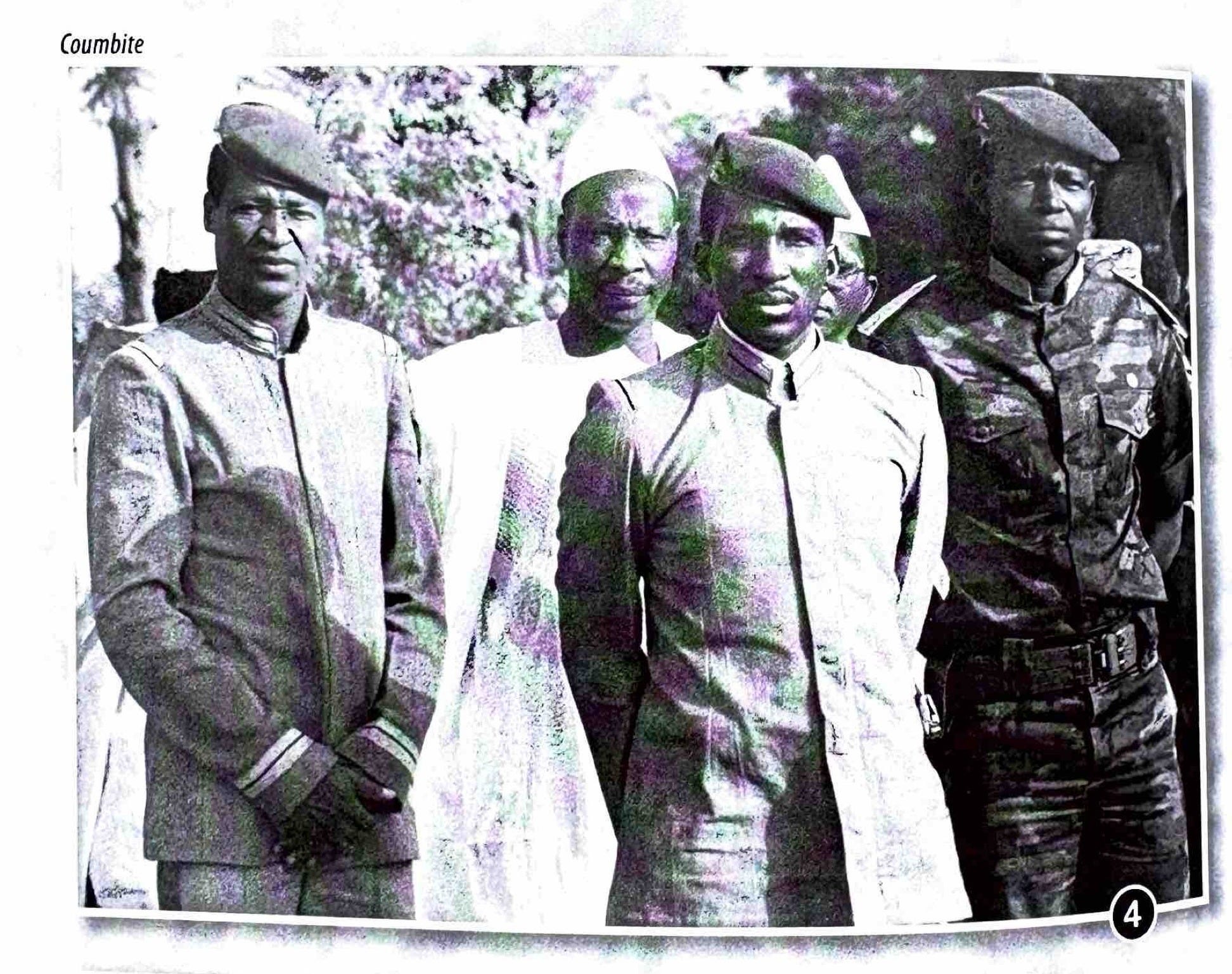
While Burkina Faso’s revolutionary movements have never followed an explicitly Marxist-Leninist program, we can use the above theory to demonstrate that Engels and her colleagues plainly exhibit the hallmarks of the Western purity fetish in their analysis of the current phase of the country’s revolution under Traoré.
So begins Jacobin’s article by questioning “whether a military government can be the alternative, and whether the ends justify the means.” Absent is the acknowledgement that before Traoré took power in Burkina Faso, jihadist terrorist groups were estimated to have controlled almost half of the country’s land; if the basic question of the basic right to self-determination of the Burkinabè people over their natural resources is being actively denied, how is anything less than a military response warranted? These complexities seem to fall dead at the feet of such ‘leftists’ as Engels and those at Jacobin who platform her analysis.
Groups such as Jama’at Nusrat al-Islam wal-Muslimin (JNIM—which perpetrates the vast majority of the violence in Burkina Faso today), are tied directly to Al-Qaeda, the international terrorist organization proven to be linked to the vast labyrinth of Amerikan intelligence, military/defense personnel and private contractors. Works such as journalist Max Blumenthal’s The Management of Savagery: How America’s National Security State Fueled the Rise of Al Qaeda, ISIS, and Donald Trump explore this phenomenon, relying on primary sources and interviews from ex-government officials and experts within the international community. Indeed, a different article in Engels’ Review of African Political Economy by Jeffrie Quarsie, “Is France Funding Terrorism in the Sahel?” highlights the disturbing correlation between French military presence and the 2000% increase in jihadist terrorist violence between 2007 and 2022. These facts apparently warrant no consideration in Engels’ analysis.
What most Western critics willingly gloss over is the fact that Traoré’s administration (as well as the greater AES alliance) is actively moving away from Western military aid due to strictly the anti-imperialist character of its movement. Traoré and leaders allied with him recognize that, just as Sankara stated four decades ago, “[Western] welfare and aid policies have only ended up disorganizing us, subjugating us, and robbing us of a sense of responsibility for our own economic, political, and cultural affairs.”7
Instead of interpreting the Traoré administration’s ‘authoritarian’ or ‘pragmatic’ measures with this context in mind, Engels accuses him of appropriating “anti-French sentiment, which had increased since 2019, and [using] it to generate support for his government.” Instead of leading his people against a foreign colonizing force, Traoré’s role is reduced to simply taking advantage of the already existing anti-colonial tendencies for what are construed as undemocratic purposes. For Engels, the refusal to address the political context that exists in Burkina Faso works to the benefit of her analysis that Traoré and the current phase of the Burkinabè Revolution are decidedly undemocratic and therefore must be condemned.
We must recognize that the anti-French sentiment which Engels accuses Traoré of exploiting has been present throughout Burkina Faso since the 1980s, and in greater West Africa for much longer; it is not a new phenomenon by any means, and to imply it is in some way unjustifiable or coincidental is to ignore more than a century of evidence to the contrary. With this in mind, one can begin to question why the politico-economic transformations taking place in the Sahel today should be labeled as ‘authoritarian’ at all—for whom, exactly, are they ‘authoritarian?’ If Burkina Faso under Traoré is ‘authoritarian,’ how shall we describe the centuries-long war of oppression waged by Western European colonialist elite against the people of Africa?
Nowhere in Engels’ observations is there the notion that perhaps—as the brutal legacy of Western European imperialism shows—the US and France’s military involvement in the Sahel does not serve the interests of the Burkinabè people; it is rather very much to the contrary. Unmentioned in both articles is the fact that Western nations have a monstrous record when it comes to effective counterterrorism campaigns via AFRICOM, the international colonial military machine, operating primarily out of Western Europe but spearheaded by the US. Multiple reports have shown that the increase in foreign military activity in West Africa is directly correlated with the sharp rise in terrorist violence.
By applying a purity fetishist lens to her analysis of the Burkina Faso Revolution, Engels shifts the focus of the reader away from the fundamental achievements of the Burkinabè working class under Traoré—much of which do indeed echo the popular policies of Sankara’s time—and towards unequivocally condemning the uncomfortable (for Westerners, that is) possibility of the US/French-backed liberal hegemony being existentially threatened in West Africa. As such, the remaining chapters of this project will be dedicated to dissecting some of the specific accusations leveled at Traoré and the Burkina Faso Revolution.
This is part 1 of a series. Parts 2 & 3 coming soon!
~
Garrido, Carlos L. The Purity Fetish and the Crisis of Western Marxism. Midwestern Marx Publishing Press, 2023. p. 15.
Losurdo, Domenico. Western Marxism: How it was Born, How it Died, and How it Can be Reborn. Monthly Review Press, 2017. p. 73.
Id. at p. 51-52.
Id. at p. 69.
Garrido, Carlos L. The Purity Fetish and the Crisis of Western Marxism. Midwestern Marx Publishing Press, 2023. at p. 35.
Id. at p. 36.
Sankara, Thomas. Thomas Sankara Speaks: The Burkina Faso Revolution, 1983-1987 (edited by Michael Prairie). Pathfinder Press, 2007. p. 167.
Libs and socdems love failed revolutionaries who are safely dead, but fear those who are dangerously alive.
Excellent analysis !
(how could this bastard die from a heart attack if he had no heart? Anyway, there's still hope.)