
Tomorrow the Machine (III)
Jacobin's Purity Fetish Analysis of the Burkina Faso Revolution

Dying colonialism is reviving in the international coalitions of neo-colonialism. These coalitions of competing organisms reflect the global character that financial monopoly has attained under the dominance of the most powerful imperialism, that of America.
-Kwame Nkrumah, Neo-Colonialism: The Last Stage of Imperialism
This is part 3 of a series. Read parts 1 and 2 here.
As we have seen, the analysis that Dr. Bettina Engels and Jaocbin put forth in both of the articles in question provides absolutely no room for the concrete cultural complexities that exist within both Burkina Faso as a nation, much less the Sahel as a region. Even if those of us living in Western countries have moral and ethical qualms with certain policies and reforms, acknowledging they are taking place must be precipitated by an understanding of the context in which they come to be.
Contrary to Engels’ assertions, it is not under the clever guise of ‘Sankarism’ that the Traoré administration is parceling out reforms to quell public unrest. To assert as such is to display a fundamental misunderstanding of the objective conditions in which the vast majority of Burkinabè people find themselves. To Burkinabès, Sankara does indeed represent resistance and hope for a brighter future—but Sankara alone is not the Burkina Faso Revolution, and the same should be understood of Traoré.
Thomas Sankara would likely still be living today if he were not murdered by his longtime friend and NATO-backed traitor Blaise Campaoré—who is now peacefully waiting out his exile in the Ivory Coast (the country from which many of the coup-plotters are originating!). The Burkinabè people have come to terms with the implications of Sankara’s death; to deny this fact is to ignore the painful period of recent Burkinabè history from 1987-2014 in which Campaoré re-instituted many of the neoliberal reforms Sankara’s revolutionary movement had done away with.
Astonishingly, Campaoré is simply referred to by Engels in her Jacobin article as “the man who overthrew [Sankara]”—the extent to which Campaoré’s Western-approved policies reversed many of the revolutionary gains for Burkina Faso’s working class during this period is altogether disregarded.
The Burkina Faso Revolution lives on without Sankara—not through the sole image of Traoré donning the red beret, but through his administration’s enabling of the expression of self-determination by the Burkinabè people. The popular movement which caused the traitor Campaoré to flee to exile in 2014 is not unconnected from the events that are seen today. Nevertheless, the classic Western error of attributing the lifeblood of a popular working class movement to the iconoclastic charisma of one man or group of people is clearly seen in Engels’ and Jacobin’s work here.
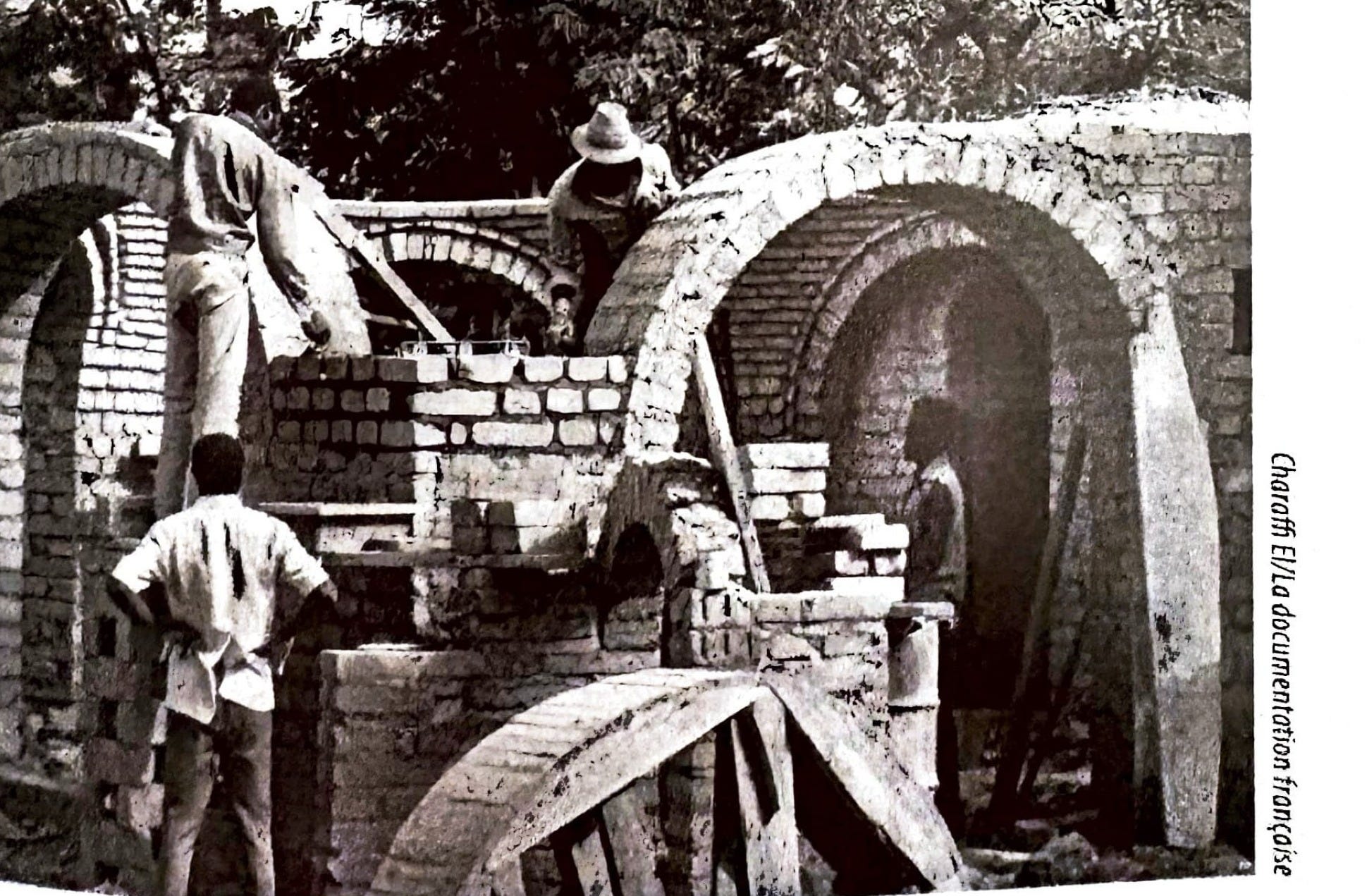
It is within this context that Traoré is not only cutting Burkina Faso’s remaining ties to the Western world, but directly reinvesting resources into the domestic economy to achieve material gains for the country’s working class: providing land, tractors, buses, trucks, fertilizers, concrete, and other tools of infrastructure. The Burkinabè people have been intentionally deprived of these necessities for far too long by Western colonial interests. Where Western ‘leftists’ err is instead of attributing this deprivation to the legacy of neocolonialism, they assume it is primarily due to the ‘authoritarian,’ ‘conservative,’ or ‘backward’ tendencies being exhibited by popular leaders such as Traoré.
Embodying Dr. Carlos L. Garrido’s purity fetish,1 Engels effectively shifts the responsibility for the oppression of the Burkinabè people from their actual oppressors—the Western politico-economic elites who facilitate and perpetuate the system of capitalist imperialism—and thrusts it onto the popular revolutionary movement actively trying to stave off a violent, colonial siege.
Additionally, the purity fetish as it is applied to the Burkina Faso situation by Engels and Jacobin leads to the assessment that working class figures like Traoré subscribe to the same values as the lustful, power-hungry elites that are actively working to undermine and destroy them. The concrete material changes Burkina Faso has undergone since Traoré took power in 2022 (as mentioned in part one) serve as evidence to the contrary.
As Sankara himself said in his 1983 “Political Orientation” speech: “Imperialism is everywhere. Through the culture that it spreads, through its misinformation, it gets us to think like it does, it gets us to submit to it, and to go along with all its maneuvers. For goodness’ sake, we must stand in imperialism’s way… It is imperialism that assassinated the Lumumbas, the Cabrals, and the Kwame Nkrumahs.” If Burkina Faso under Traoré acted in accordance with Western standards of ‘purity,’ as Engels and Jacobin claim it should, he would likely join the long list of imperialism’s victims as Sankara so fatefully did in 1987.2
~
Another rather weak claim that is stressed in most Western-sourced analyses regarding Burkina Faso is its condemnable policy of pursuing a strategic partnership with Russia. Most Western outlets jump at the chance to make note of several Russian flags at rallies in Ouagadougou and contracts with Russian mining corporations. Few, if any, ask themselves why Burkina Faso should not have the right to conduct business with whomever it chooses, as the Amerikan empire does.
Likewise, absent from scrutiny was the previous near-total ownership of the Burkinabè mining industry by France, the UK, and Canada before they were finally ousted in 2023; these Western corporations controlled far more of Burkina Faso’s mining industry prior to 2023 than Russian ones do today. Perhaps this is because such scrutiny would require acknowledging that the Russian contracts which replaced them are fairer to the Burkinabè people, including stipulations such as requiring Russian mining companies to hire from the local population (thanks to a 2023 law passed by the popular assembly) and to commit a larger amount of their profits to the Burkinabè state. Such grievances levied at Burkina Faso smack of old Cold War-era, anti-Communist sentiment, which, as many younger generations of the world are coming to realize, has no basis in reality.
A thorough analysis of the US-backed propaganda recently published regarding Burkina Faso will expose various tendencies characteristic of the capitalist/imperialist ruling class. Engels and Jacobin, by applying the purity fetish to their analysis, establish a backdrop of Western bourgeois standards and expectations for the African nation’s revolutionary project. They completely ignore the complex cultural history of the Sahel Region, that of Burkina Faso as a relatively nascent national project, and the very concrete material improvements the Burkinabè people have seen since Traoré took power in 2022.
In his famous 1984 United Nations speech, Thomas Sankara makes the following appeal to the Western world:
I make no claim to lay out any doctrines here. I am neither a messiah nor a prophet. I possess no truths. My only aspiration is twofold: first, to be able to speak on behalf of my people, the people of Burkina Faso, in simple words, words that are clear and factual. And second, in my own way to also speak on behalf of the “great disinherited people of the world,” those who belong to the world so ironically christened the Third World. And to state, though I may not succeed in making them understood, the reasons for our revolt… My country is brimming with all the misfortunes of the peoples of the world, a painful synthesis of all humanity’s suffering, but also—and above all—of the promise of our struggles. This is why my heart beats naturally on behalf of the sick who anxiously scan the horizons of a science monopolized by arms merchants.3
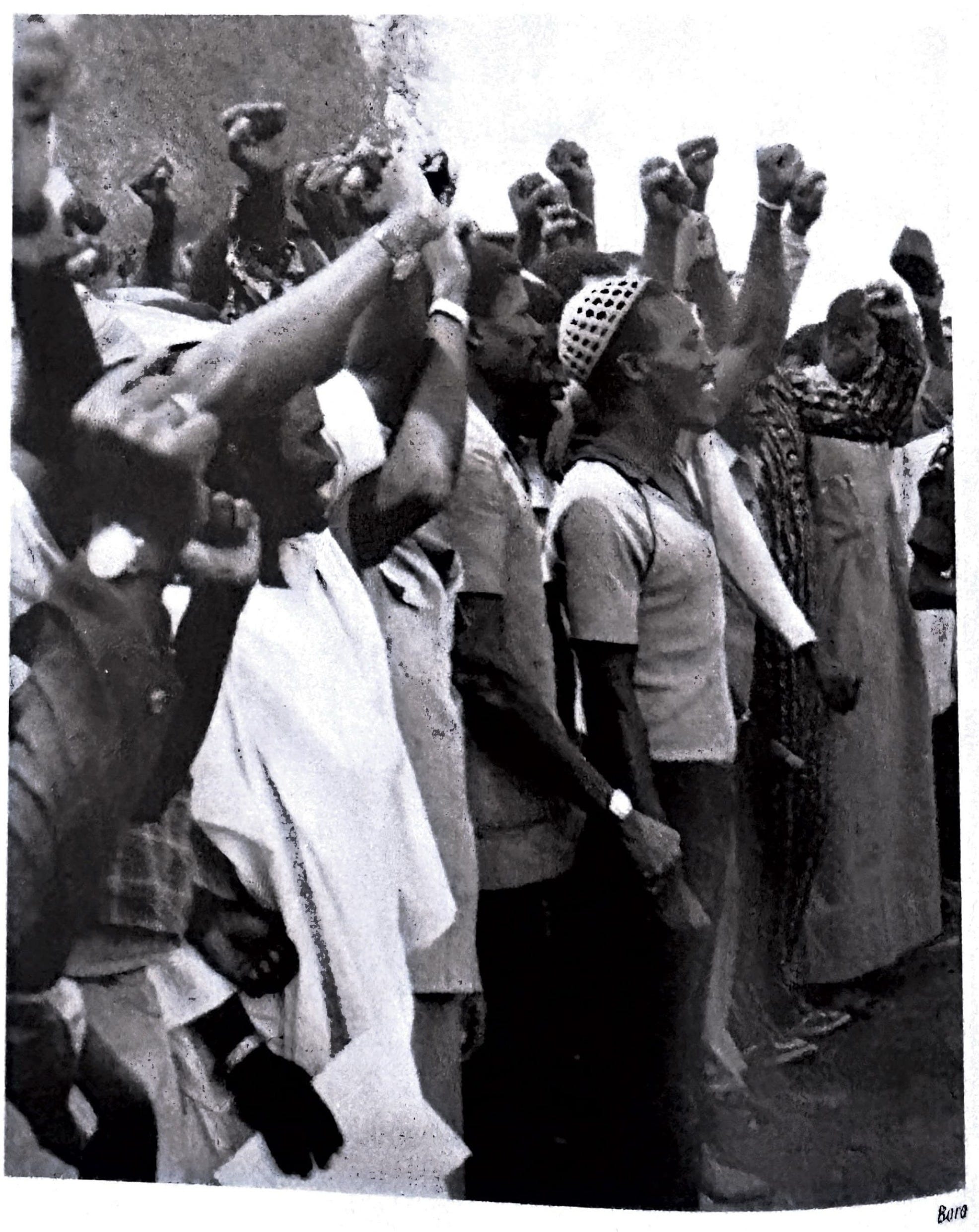
Both Sankara—through his revolutionary legacy, garnished with such eloquence as that cited above—and Traoré, through his everyday actions, make one thing plain: as Western observers, our opinion and analysis of the Burkina Faso Revolution is ultimately irrelevant. In the end, it is the Burkinabè people alone—not those living in the land of international arms merchants—who decide the legitimacy of this current phase of their anti-imperialist struggle.
Engels, and by extension Jacobin, seem to reject, above all, the creative ways in which Traoré’s administration has navigated the minefield of modern neocolonialism as it exists today. These maneuvers have been essential in the maintenance of Burkina Faso’s self-determination as a sovereign country (such as it is), and the current numerous invasions by the US-backed West of other civilizations around the world should serve as proof of this fact.
~
In his 1965 magnum opus Neo-Colonialism: The Last Stage of Imperialism, revolutionary Pan-Africanist and first President of the sovereign nation of Ghana, Kwame Nkrumah, gives credence to “the argument for continentally-planned economic growth so that all [African] States can benefit from industrialisation and other improvements made possible by unified direction.”4 Like Sankara, Nkrumah always emphasized the fact that he spoke for all of Africa—a balkanized continent suffering the brunt of capitalist imperialism and colonialism at the hands of Western elites.
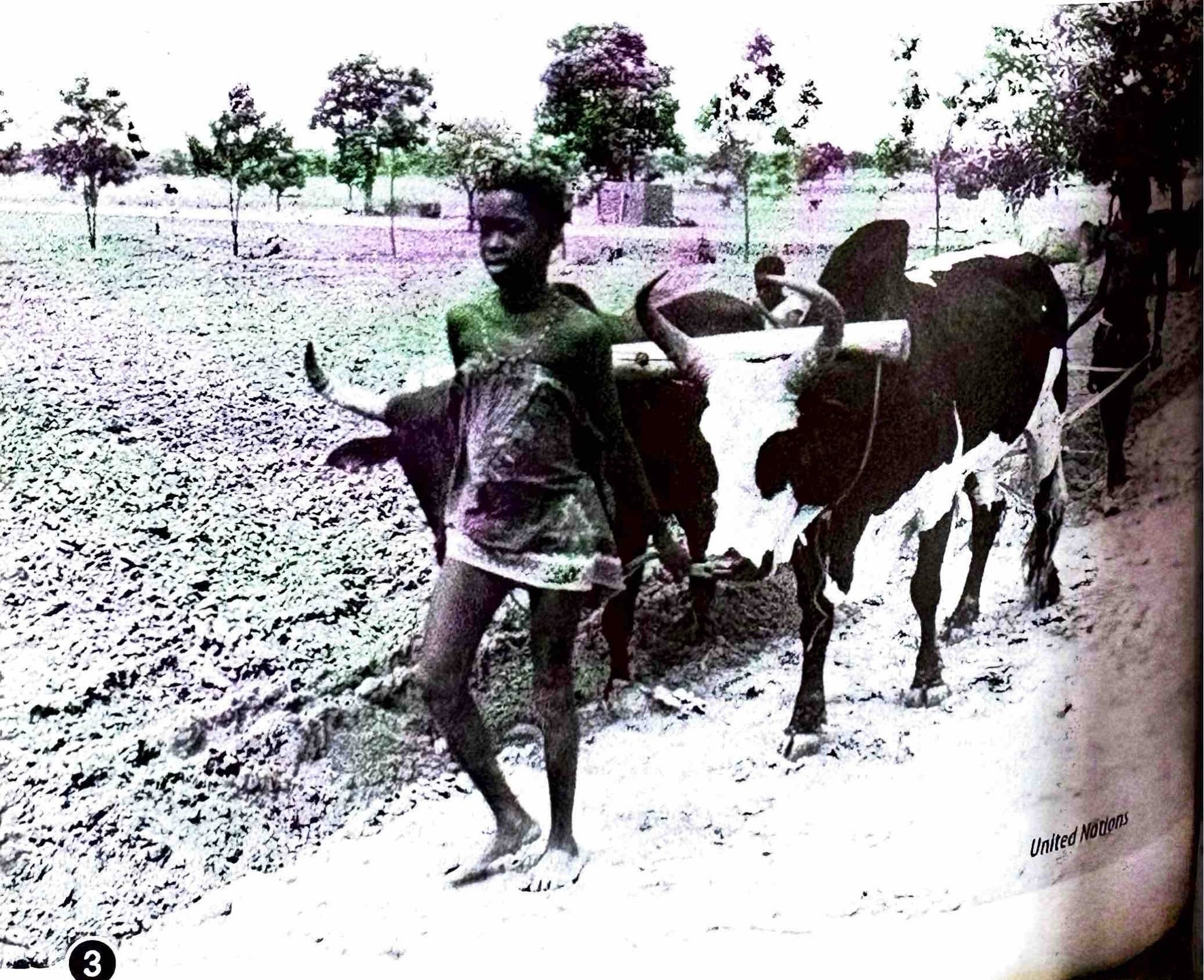
The people of Burkina Faso, despite the arguments posited by Western ‘leftists’ platformed by such well-known outlets as Jacobin, are no exception; under Traoré, as we have seen, the Burkinabè people represent the stalwart against neocolonialism in Africa, that genocidal force which Nkrumah refers to as “the mainspring of power, the direction of policies that stand against the advancing tide of freedom of the exploited people of Africa and the world.”5 Yesterday, the working class of Burkina Faso’s past was stuck with only the hoe to plow their fields. Today and tomorrow, with Traoré’s revitalization of the Burkina Faso Revolution—the machine—self-determination and liberation for the Burkinabè people can finally be seen on the horizon once again.
See Garrido, Carlos L. The Purity Fetish and the Crisis of Western Marxism. Midwestern Marx Publishing Press, 2024.
Sankara, Thomas. Thomas Sankara Speaks: The Burkina Faso Revolution, 1983-1987. Pathfinder Books, 2007. at p. 55.
Id. at p. 162-171.
Nkrumah, Kwame. Neo-Colonialism: The Final Stage of Imperialism. PANAF Books, 2009. p. 27.
Id. at p. 36.
Thank you so much for your article.
Here the Capitaine Traore speaks to the youth
https://m.youtube.com/watch?v=cZH5ccW2NtI