
When the World Revolves Around Iran
A Narrative of America’s Deadlock in a Changing Global Order


These days, the world’s attention is fixed on the Middle East, and particularly on Iran, not merely because of a regional crisis, but because many global developments, from energy markets to the competition among great powers, have become intertwined with Tehran.
Tensions surrounding the Strait of Hormuz, rising oil and gas prices, economic pressure on Europe, the continuation of the war in Ukraine, and the deepening divide between the West and the Russia-China bloc are all links in a chain at whose center Iran now stands. Years of economic pressure, sanctions, and military threats failed to compel Tehran to make a fundamental change in its strategic course. Yet the consequences of this confrontation have now extended far beyond the Middle East and have become one of the defining factors shaping the world’s political and economic landscape.
At the same time, the timing of these developments has become increasingly sensitive for Washington. The United States is approaching major international events, including the FIFA World Cup, and any escalation of the crisis in the Middle East could affect not only energy markets, but also the political climate and global image of the United States. For this reason, some analysts believe that the White House is more eager than ever to contain tensions and reach some form of agreement that could prevent the crisis from expanding and restore at least a measure of stability to the international arena.
Meanwhile, recent diplomatic developments also offer a picture of a shifting global balance of power. While U.S. efforts to consolidate its position in Asia have been accompanied by considerable uncertainty, Moscow and Beijing have increasingly emphasized the idea of a “multipolar order,” an order in which the United States will no longer enjoy the uncontested role it held in previous decades.
Perhaps the central question is this: Has the world truly entered a new phase of multipolarity, or is the crisis surrounding Iran merely a sign of the gradual erosion of the old order?
The Deadlock of Maximum Pressure
Today, the world’s attention is fixed on Iran, not by choice, but out of necessity. Tensions in the Strait of Hormuz, soaring oil and gas prices, mounting pressure on European economies, and the continuation of the grinding war in Ukraine are all linked, directly or indirectly, to Tehran. Russia has not been defeated in Ukraine, nor has NATO achieved its ultimate objectives. Yet the center of gravity of many of these crises lies elsewhere: Iran, a country whose strategic course Washington and Tel Aviv spent years trying to alter, only to find themselves confronted with the deadlock of that very confrontation.
In an article published in April on the “multi-layered crisis of the Middle East,” it was suggested that the confrontation with Iran could gradually evolve beyond a purely regional issue and become a matter tied to energy, the global economy, and the balance of power among major actors. Recent developments indicate that some of those trends are now more visible than ever before.
The U.S. policy of “maximum pressure” against Iran, which in recent years had become one of the world’s most significant geopolitical issues, has now reached a stage where even tougher measures have failed to produce a decisive outcome. The United States and Israel believed that, after years of economic sanctions, diplomatic pressure, and political isolation, they could force Tehran into a strategic retreat. Recent developments, however, have shown that this calculation has not yielded the expected results, at least not thus far.
Under such circumstances, Donald Trump, facing mounting domestic and international pressure, has a greater need than ever to contain the crisis and prevent further escalation. The announcement of a ceasefire and a return to dialogue is less a sign of resolution than an indication of the difficulty of sustaining a costly confrontation, one that has repeatedly returned to the negotiating table over the past four decades, only to slide back into renewed tension each time.
Nevertheless, Tehran is now more skeptical than ever about Washington’s true intentions. Four decades of mistrust cannot be erased through a few rounds of negotiations. Trump speaks of continuing talks and the possibility of reaching an agreement, but the historical experience of relations between the two countries suggests that achieving a durable settlement is far more complicated than political statements often imply.
A review of recent developments shows that the strategy of maximum pressure has not only failed to alter Iran’s strategic behavior, but has also produced consequences that have spread to the global level, particularly in the areas of energy, security, and the balance of power. The United States succeeded in imposing severe economic pressure on Iran, yet those measures led neither to a new agreement nor to a fundamental retreat by Tehran. Iran, for its part, managed to absorb part of that pressure through domestic mechanisms, regional cooperation, and expanding ties with powers such as Russia and China.
Iran continues to insist on its nuclear program, missile development, and regional policies, a reality that demonstrates that external pressure alone is insufficient to alter Tehran’s strategic calculations. At the same time, Iran’s geopolitical position and its vital role in the Strait of Hormuz mean that any tension in the region can immediately affect global energy markets. As a result, the Iranian crisis is no longer merely a bilateral issue between Tehran and Washington; it has become part of a broader crisis involving global security and the world energy economy.
In this context, Israel’s role is also noteworthy. Perhaps one of the most significant obstacles to any potential agreement is Tel Aviv itself, a reality that is clearly visible both in developments on the ground and in the political and media landscape.
Trita Parsi, Executive Vice President of the Quincy Institute and a well-known analyst of Iranian affairs, argues in response to public statements by several members of Netanyahu’s cabinet opposing any agreement between Tehran and Washington that such positions reveal a segment of Israel’s political establishment that is fundamentally uninterested in the success of negotiations.
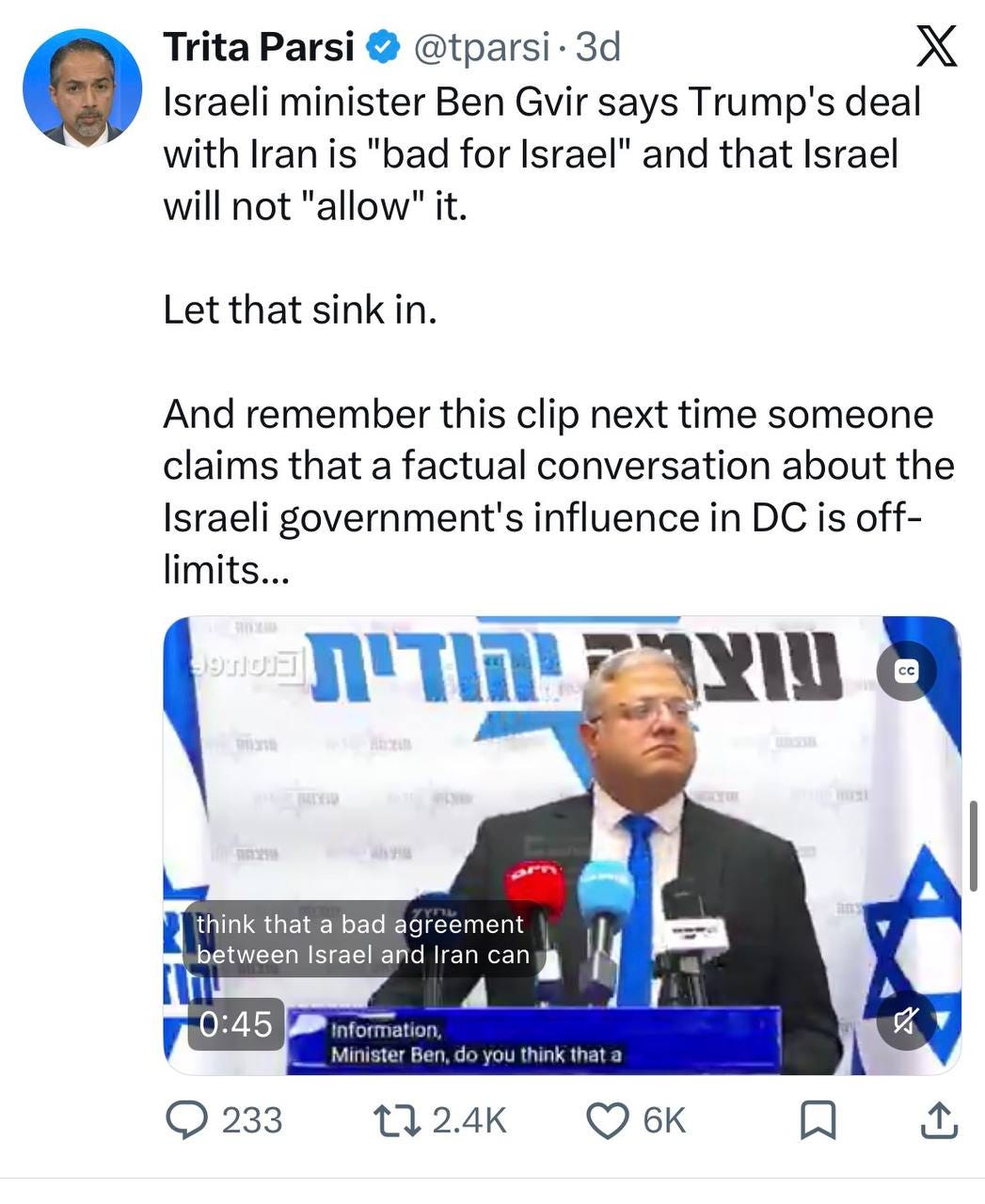
Thus, Trump finds himself in a complex position. On the one hand, Iran is unwilling to relinquish the gains it believes it has achieved through resisting external pressure. On the other hand, Israel, through its political influence in Washington, remains a significant obstacle to any form of compromise. As a result, the White House is caught between containing the crisis, preserving its global credibility, and preventing the expansion of regional tensions. Under such circumstances, reaching a lasting agreement appears, if not impossible, then at least exceedingly difficult.
Yet the Iranian crisis may be more than merely a regional conflict or even a nuclear dispute. What is taking shape around Tehran today is, above all, a sign of a broader transformation in the structure of global power, a transformation whose effects are gradually becoming visible from the Middle East to East Asia.
Multipolar Order versus Unipolar Order
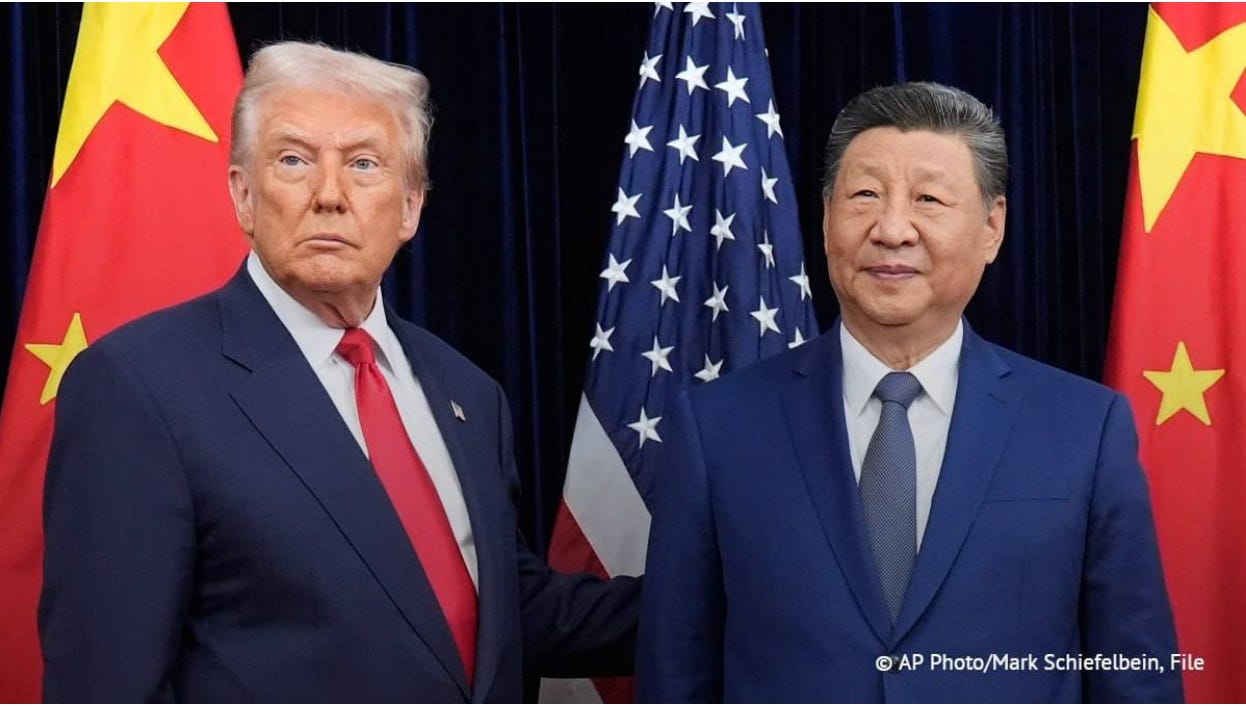
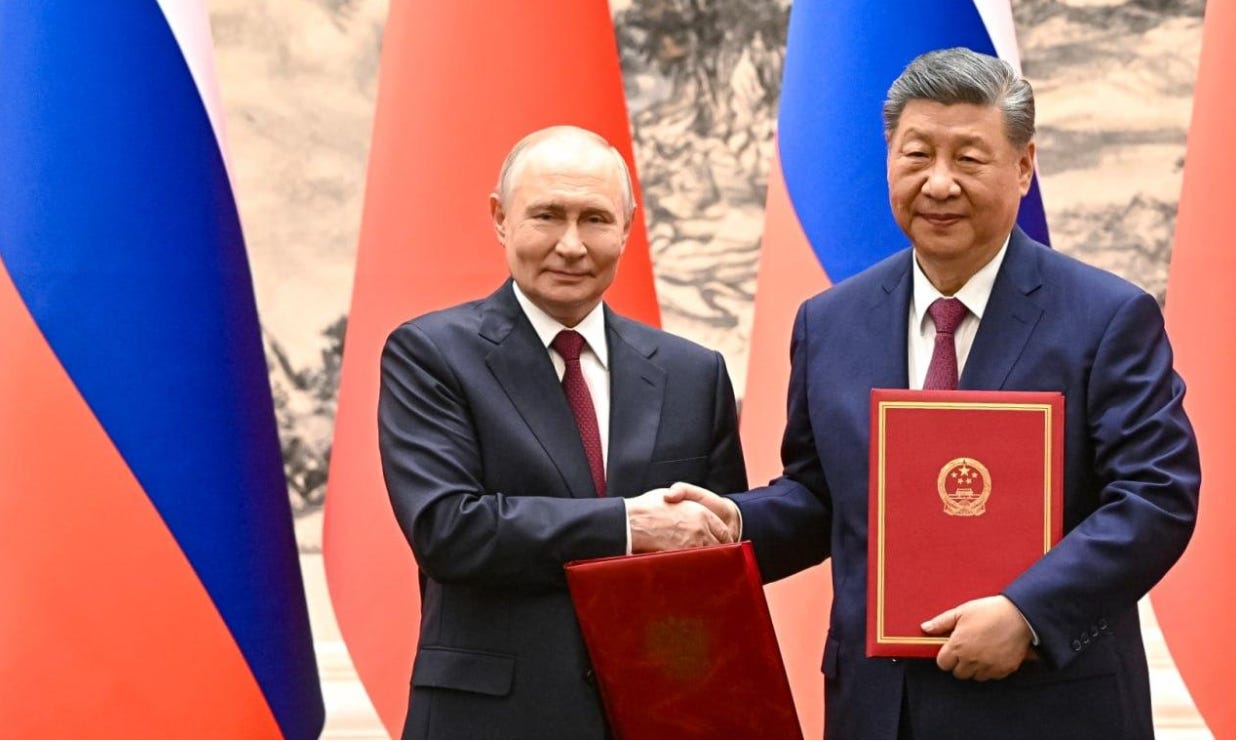
To understand the shift that is currently taking shape in the global balance of power, one needs only look at two nearly simultaneous visits to Beijing: the visit of Donald Trump and the visit of Vladimir Putin. The interval between the two meetings was so short that it seemed as though both sides were attempting to place their own vision of the future world order before China. Yet the outcomes of these visits offered contrasting pictures of the current state of the world, a picture of competition between an order showing signs of erosion and another that is still in the process of taking shape.
Trump’s visit to China concluded without any decisive breakthrough. No major agreement was announced, nor was there any clear indication of a reduction in strategic competition between the two powers. Although some limited economic agreements were discussed, including those related to tariffs and aircraft purchases, the overall atmosphere of the meetings suggested that mutual distrust continues to cast a shadow over relations between Washington and Beijing.
In contrast, Putin’s visit to Beijing was marked by a clear display of political and strategic coordination between the two countries. Once again, both sides emphasized the expansion of long-term cooperation and their support for the idea of a “multipolar order,” a concept that, in recent years, has become one of the central pillars of the political discourse in both Moscow and Beijing. The signing of cooperation agreements, the emphasis on coordination in the fields of energy and trade, and the public display of political closeness between the two countries conveyed a clear message: that relations between China and Russia have entered a deeper and more advanced phase of cooperation.
The reality behind these two visits goes far beyond routine diplomacy. The triangular relationship among the United States, China, and Russia demonstrates that the world no longer functions as it did in the decades following the Cold War. Despite their extensive economic interdependence, Washington and Beijing continue to view one another as strategic competitors. Moscow and Beijing, meanwhile, despite certain differences, increasingly define themselves as partners in the face of Western pressure.
In this context, the Taiwan issue remains one of the most significant points of tension between the United States and China. Washington seeks to use the issue as a source of leverage against Beijing, yet China today occupies a very different position from the one it held in the past. Economic growth, technological advancement, expanding regional influence, and deepening cooperation with Russia and other non-Western powers have given Beijing greater confidence, particularly at a time when initiatives such as BRICS, trade conducted in local currencies, and efforts to reduce dependence on the U.S. dollar are gradually gaining a stronger place in global affairs.
Perhaps this is the most important development of recent years: the United States is no longer confronting a world with only one center of power. While Washington is simultaneously engaged in the Iranian crisis, the war in Ukraine, and strategic competition with China, Moscow and Beijing are seeking to present a different vision of the future: a world in which decision-making is no longer concentrated in the hands of a single power.
In such an environment, the growing alignment among Iran, Russia, and China no longer appears to be merely a temporary or tactical arrangement. More than anything else, it reflects a broader transformation in the international order, a transformation in which non-Western powers are attempting to create a new balance against the traditional U.S.-led structure. China, with its economic and technological capacity; Russia, with its military and geopolitical influence; and Iran, with its strategic location and pivotal role in global energy dynamics, each represent part of this larger process.
At the same time, the war in Ukraine has evolved into a prolonged war of attrition in which Russia has not been defeated, nor has NATO succeeded in achieving its strategic objectives. Europe finds itself under pressure from high energy costs, economic stagnation, and growing internal political divisions. Meanwhile, in the East, China and Russia speak more openly than ever about a “multipolar order,” not merely as a political slogan, but as a project aimed at redefining the global balance of power.
It may still be too early to formally declare the end of the unipolar order. Yet the signs of its erosion have become more visible than ever before. The world today no longer resembles the decades in which a single power could unilaterally determine the course of international politics, economics, and security. From the Middle East to Ukraine, from the Strait of Hormuz to the South China Sea, crises no longer operate in isolation; they have all become part of a broader competition over the shape of the future world order.
And at the center of many of these developments stands Iran, a country that was once viewed merely as a regional issue, but whose surrounding crisis has now become one of the principal arenas for measuring the balance of power in the world. The world may not yet have fully entered the multipolar era, but at least one reality has become clearer than before: the age of uncontested American-led order no longer appears as certain or as free from challenge as it once did.
 | A guest post by
|
Thanks for your great work!
We've restacked and shared this link on 'The Stacks'
https://askeptic.substack.com/p/the-stacks
Is it possible to have a definitive breakthrough with this administration? Trump shows little awareness of, and less interest in, observable reality, and the rest of his administration happily plays along. Not to mention the willingness to trash prior commitments on a whim. Wouldn't Russia/China/any other country the US can't just smash prefer to wait for an administration that is capable of negotiating?